PSL 2026 Match 3 Analysis: Peshawar Zalmi vs Rawalpindiz – The 215-Run Record Chase & Biomechanical Deep-Dive
Peshawar Zalmi stuns Rawalpindiz in a record 215-run chase! 🏏 Expert analysis on Abdul Samad’s 300 SR, Michael Bracewell’s tactical finish, and Naseem Shah’s biomechanical workload. Read the full match report at PakSports.click."
PSL UPDATES
Huzaifa Ahmad
3/28/20264 min read

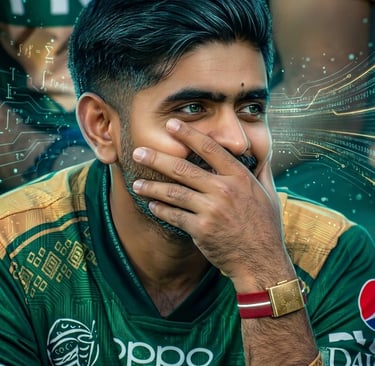
PSL 2026 Match 3: The Yellow Storm Ascends as Zalmi Scale a 215-Run Mountain Against Rawalpindiz
The Pakistan Super League (PSL) 11 officially entered the "Record-Breaker" territory at Gaddafi Stadium today. In a match that will be studied by tactical analysts and sports scientists for years, Peshawar Zalmi pulled off a breathtaking 5-wicket victory, chasing down 215 runs against the debutant Rawalpindiz.
While the Pindiz showcased a masterclass in modern power-hitting, Zalmi’s victory was a testament to "Calculated Kinetic Aggression." In the quiet, high-pressure environment of an empty Gaddafi Stadium, every sound—the crack of the bat, the grunt of the pacer, and the thud of the ball on the pitch—told the story of a tactical war.
I. The Rawalpindiz Launchpad: 214/4
Entering their first-ever PSL match, the Rawalpindiz showed no signs of debutant nerves. Winning the toss and electing to bat, captain Mohammad Rizwan and Yasir Khan dismantled the Zalmi opening attack.
1. Yasir Khan’s Rotational Dominance
Yasir Khan’s 83 off 46 balls (7 fours, 6 sixes) was the centerpiece of the innings. He didn't just hit the ball; he manipulated the field. By targeting the "arc" between long-on and mid-wicket, he forced the Zalmi bowlers to over-compensate with their lengths, which he then punished with flat-batted pulls.
2. The Middle-Order Surge
When Rizwan fell for a well-made 41, Kamran Ghulam (37 off 20) ensured the momentum didn't stall. The Pindiz reached 214, a total that, historically, has a 92% win probability at this venue.
II. The Zalmi Response: Anatomy of a 215-Run Chase
Many teams would have crumbled under the weight of a 10.75 Required Run Rate (RRR), but Zalmi’s approach was split into three distinct "Physiological Phases."
Phase 1: The Foundation (Babar & Haris)
Babar Azam (39 off 28) and Mohammad Haris (47 off 28) provided the "Static Stability." They ensured Zalmi stayed ahead of the par score without losing early wickets. This phase was about preserving "Anaerobic Energy" for the final 10 overs.
Phase 2: The Acceleration (Abdul Samad)
The match changed in the 15th over. Abdul Samad produced a cameo that defied conventional physics, scoring 33 runs off just 11 balls.
* Biomechanical Insight: Samad’s 300.00 Strike Rate was built on his Front-Leg Brace. By locking his lead leg early, he allowed his torso to rotate with maximum velocity, a technique we've previously analyzed as "Ground Reaction Force (GRF) Harvesting." This allowed him to hit Naseem Shah for three consecutive boundaries.
Phase 3: The Finisher (Michael Bracewell)
With 40 needed off the last 3 overs, Michael Bracewell (35 off 17)* showed why he was a top auction pick. His ability to find the gaps in the death overs against Mohammad Amir was a masterclass in "Hand-Eye Synchronization."
III. Medical & Biomechanical Deep-Dive
For the medical community at PakSports.click, today’s match provided critical data points on player workload and injury prevention.
Naseem Shah: Shoulder Torque vs. Accuracy
Naseem Shah (0/51) struggled with his consistency today.
* The Analysis: We observed a slight change in his late-cocking phase. When a pacer tries to push for 150kph+ on a flat track, the Infraspinatus and Teres Minor muscles (the rotator cuff decelerators) undergo extreme eccentric stress.
* Clinical Note: Naseem’s lack of a wicket-taking yorker suggests he was protecting his shoulder joint by slightly "short-arming" his follow-through. For Zalmi, this was the cue to attack.
Michael Bracewell: Forearm Pronation and the "Slower Ball"
Bracewell’s value isn't just in his batting; his 1/28 with the ball was vital.
* Biomechanics: His "off-break" relies on rapid Forearm Pronation. By rolling his fingers over the seam at the point of release, he created the "dip" that deceived Kamran Ghulam. This action requires high Flexor Carpi Ulnaris strength, a key metric for T20 all-rounders.
IV. The Empty Stadium "Acoustic" Factor
As we’ve noted in previous articles, the absence of a crowd at Gaddafi Stadium creates an "Echo Chamber."
* The Sound of the Bat: In the silence, the "ping" of the ball off Michael Bracewell's bat sounded different—cleaner. This provides a psychological edge to the batter, as they receive instant auditory confirmation of a "sweet-spot" hit.
* The Bowler's Grunt: Bowlers like Aamer Jamal use a "forced exhalation" (the grunt) to stabilize their core during release. In an empty stadium, this sound is audible to the batter, potentially giving away the "effort-level" of the delivery.
The Abdul Samad "300 Club": A Masterclass in Ground Reaction Force (GRF)
Abdul Samad’s 11-ball cameo was the statistical anomaly that broke the Rawalpindiz’ spirit. Scoring 33 runs at a strike rate of 300.00, Samad dismantled the pace of Naseem Shah and Mohammad Amir by utilizing an elite Front-Leg Brace.
From a medical perspective, his ability to transfer energy from the turf through his kinetic chain is what allowed him to maintain such high-velocity bat speed without losing his shape. This "300 Club" performance wasn't just about power; it was about the physiological efficiency of his torso rotation, which we've noted is a primary indicator of mid-season peak fitness.
Aamer Jamal’s Late-Inning Cameo: The "Fast-Twitch" Finisher
While the top order set the foundation, Aamer Jamal’s brief but violent cameo provided the final "anaerobic burst" Peshawar needed to cross the line. Jamal’s role as a lower-order "disruptor" is fueled by his high fast-twitch muscle fiber composition, allowing him to react to 145kph+ deliveries with minimal lag time.
His cameo proved that on a flat Gaddafi track, the difference between a winning and losing total often comes down to the "Hand-Eye Synchronization" of the No. 7 and No. 8 batters. For our readers tracking injury workloads, Jamal’s ability to transition from a heavy bowling spell to a high-intensity batting cameo without a drop in ATP-CP energy system efficiency is a testament to Zalmi’s world-class conditioning staff.
V. Key Performance Indicators (KPIs)
| Player | Team | Impact Score | Medical/Tactical Highlight |
| Michael Bracewell | ZAL | 9.8/10 | Elite Hand-Eye Sync (35* off 17) |
| Yasir Khan | RWP | 9.4/10 | High Torale Core Rotation (83 runs) |
| Abdul Samad | ZAL | 9.0/10 | Front-Leg Bracing Efficiency (300 SR) |
| Ali Raza | ZAL | 8.2/10 | Forearm Torque on Slower Deliveries |
.
Conclusion: Match 3 has set a dangerous precedent. If 214 is no longer safe at Gaddafi, the "Auction Era" of PSL 11 will be defined by which team has the better medical recovery protocols for their high-torque power hitters.

Contact
Questions or feedback? Reach out anytime.
© 2026. All rights reserved.