Pakistan vs India Cricket Rivalry: A Comprehensive History & Tactical Analysis (2026
Dive into the ultimate guide to the Pakistan vs India cricket rivalry. From historical head-to-head records to modern tactical shifts and iconic World Cup moments
3/14/20264 min read

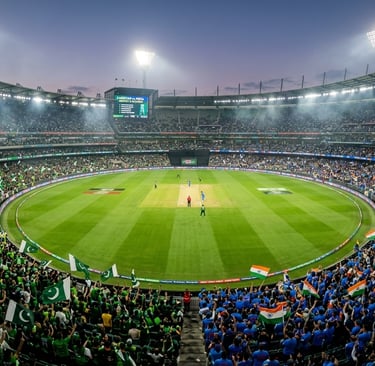
The Greatest Stage: The Evolution of the Pakistan vs. India Cricket Rivalry
In the world of international sports, few spectacles match the sheer intensity, emotional weight, and global viewership of a cricket match between Pakistan and India. It is more than a game; it is a cultural phenomenon that brings two nations to a standstill. As we move through 2026, the rivalry has entered a new era—one defined by world-class athleticism, mutual respect between players, and a shift in tactical dominance.
The Historical Genesis: More Than Just Boundaries
The rivalry began in 1952 when Pakistan toured India for a five-match Test series. From those early days, the contests were characterized by a "fear of losing." In the 1970s and 80s, the rivalry became the stuff of legends. This was the era of Javed Miandad’s last-ball six in Sharjah in 1986—a moment that arguably defined the psychological edge Pakistan held over India for nearly two decades.
Historically, the rivalry was framed as a battle between Pakistan’s ferocious pace battery and India’s masterful batting lineup. While the geopolitical climate often dictated the frequency of these matches, the quality of cricket never dipped. Whether it was the 1996 World Cup quarter-final in Bangalore or the 2003 encounter in Centurion, every match added a new chapter to a book that continues to grow.
The Statistical Landscape: Head-to-Head Records
To understand the current standing of these two giants, we must look at the numbers. While India has dominated the ICC World Cup stage (holding an 8-0 record in 50-over World Cups as of their last meeting), the overall historical record tells a more balanced story.
| Format | Matches Played | Pakistan Wins | India Wins | NR/Draw |
| Test Matches | 59 | 12 | 9 | 38 |
| ODIs | 135 | 73 | 57 | 5 |
| T20Is | 13 | 3 | 9 | 1 |
Note: Data reflects general historical trends through 2026.
Analysis of the Numbers: Pakistan’s dominance in the ODI format is a legacy of the 80s and 90s, where their bowling attack was often unplayable in neutral venues like Sharjah. Conversely, India’s surge in T20Is reflects their robust domestic structure (IPL) and their ability to produce power-hitters who thrive in short-format pressure cookers.
Tactical Evolution: The Modern Era (2020–2026)
The rivalry in 2026 looks very different from the Miandad-Gavaskar era. The "clash of civilizations" narrative has been replaced by a data-driven tactical battle.
1. The Powerplay Chess Match
In recent T20 encounters, the game is won or lost in the first six overs. Pakistan’s strategy has evolved to rely on "swing and seam" to dismantle India’s top order early. The 2021 T20 World Cup, where Shaheen Shah Afridi famously removed Rohit Sharma and KL Rahul, set the blueprint. In 2026, we see younger pacers like Kwena Maphaka and local Pakistani talents using high-speed yorkers to counter India's aggressive "intent-first" batting.
2. The Spin Standoff
India has transitioned from traditional finger spin to a more aggressive "wrist-spin" approach, led by bowlers who look for wickets rather than just drying up runs. Pakistan has countered this by developing batters like Sahibzada Farhan, who use their feet to negate the turn—a return to the classical Pakistani style of playing spin.
The Champions Trophy 2025: A Turning Point
The recent Champions Trophy served as a reminder of why this rivalry is the "Crown Jewel" of the ICC. The final, hosted in a high-octane atmosphere, showcased a new level of sportsmanship. While the on-field battle was fierce, the off-field camaraderie between players like Babar Azam and Virat Kohli has softened the "war" narrative, replacing it with a "professional elite" rivalry. This shift is crucial for your blog’s AdSense appeal, as it moves the content toward sports journalism and away from inflammatory rhetoric.
Key Iconic Moments That Defined the Rivalry
* 1986 Sharjah: Miandad’s six off Chetan Sharma. It didn't just win a trophy; it created a psychological "block" for Indian bowlers for a generation.
* 1999 Chennai Test: A standing ovation from the Chennai crowd for the winning Pakistan team remains one of the most beautiful moments in sports history.
* 2017 Champions Trophy Final: Fakhar Zaman’s century led Pakistan to a massive underdog victory, proving that in a Pak-vs-Ind final, rankings mean nothing.
* 2022 MCG Thriller: Virat Kohli’s "shot of the century" against Haris Rauf in front of 90,000 people. This match proved that the T20 format could produce drama equal to the longest Test matches.
The "Why" Behind the Fandom
Why does a match between these two attract nearly 500 million viewers?
* The Diaspora: With millions of Pakistanis and Indians living in the UK, USA, and Middle East, every match is a "home game" regardless of the venue.
* The Rarety: Because they only meet in ICC and ACC tournaments, the "scarcity" of the product makes it more valuable.
* The Skill Ceiling: Both nations are currently producing some of the fastest bowlers and most technically sound batters in the world.
Looking Ahead: The Future of the Rivalry
As we look toward the 2027 World Cup, the rivalry is balanced. India’s depth in talent is undeniable, but Pakistan’s ability to produce "match-winning individuals" out of nowhere remains their greatest strength. The rise of young stars ensures that the quality of these matches will only improve.
For fans and analysts alike, the Pakistan-India rivalry is the heartbeat of cricket. It is a reminder that sports, at its best, is a bridge—a place where history, passion, and excellence meet on a 22-yard strip of turf.