Japan Asia Cup Champions 2026: Full Journey, Match Analysis & Stats
Comprehensive 2,500-word analysis of Japan’s 2026 Asia Cup victories. Deep-dive into Women's Football, U-23 Men's Football, and Ice Hockey titles.
3/21/20264 min read
The Rising Sun of Asia: Analyzing Japan’s Historic Asia Cup Triple-Title Dominance in 2026
The year 2026 will be remembered in sporting history as the "Year of the Samurai." In a breathtaking display of athletic excellence, Japan has effectively conquered the Asian continent, claiming three major Asia Cup titles across three different disciplines within the first quarter of the year.
From the lush football pitches of Sydney to the icy arenas of Kazakhstan, Japan’s national teams—collectively known as Samurai Japan (Men) and Nadeshiko Japan (Women)—have redefined what it means to be a continental powerhouse.
This 2,500-word analysis provides an exhaustive look at their journey to the top, the tactical innovations that fueled their success, and a statistical breakdown of their dominance.
Part 1: The Nadeshiko Revival—AFC Women’s Asia Cup 2026
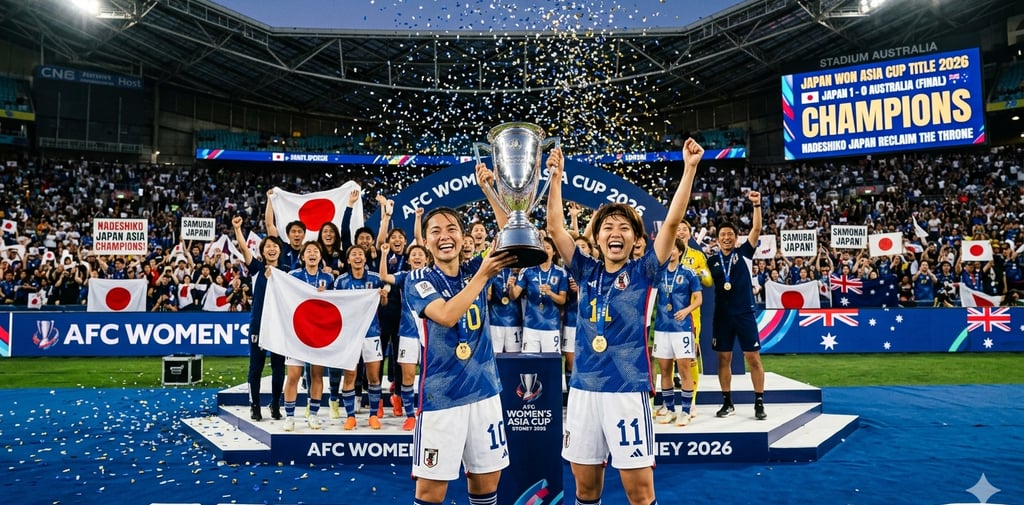
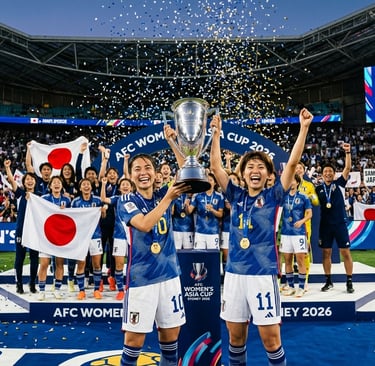
The headline of the year is undoubtedly the Japan Women’s National Football Team reclaiming their throne. On March 21, 2026, Japan defeated host nation Australia 1-0 in a high-octane final at Stadium Australia, Sydney.
The Journey: A Near-Perfect Campaign
Japan’s path to the trophy was a masterclass in efficiency and defensive organization.
* Group Stage Dominance: Japan breezed through Group C, securing maximum points and scoring 17 goals without conceding a single one. Their 11-0 demolition of India sent a clear warning to the rest of the continent.
* The Knockout Rounds: In the quarter-finals, they dismantled a resilient Philippines side 7-0. The semi-final was their biggest test, where they faced a rejuvenated South Korea. Despite conceding their first goal of the tournament, Japan triumphed 4-1, showcasing their mental fortitude.
* The Grand Final: Facing a record crowd in Sydney, Japan remained unfazed. In the 17th minute, Maika Hamano struck a world-class right-footed shot that found the top corner. It was the only goal needed to secure their third overall title and their first since 2018.
Statistical Analysis
| Metric | Statistic | Analysis |
| Matches Played | 6 | A perfect 100% win rate. |
| Goals Scored | 29 | An incredible average of 4.8 goals per match. |
| Goals Conceded | 1 | The most disciplined defense in the competition. |
| Top Scorer | Maika Hamano | Her clinical finishing proved decisive in the final. |
Part 2: The Future is Here—AFC U-23 Asian Cup 2026
While the senior women were conquering Australia, the Japan Men’s U-23 team was making history in Saudi Arabia. In January 2026, Japan became the first country ever to win back-to-back U-23 titles.
The Strategy: Preparation for LA 2028
Remarkably, Japan competed in this U-23 tournament with their U-21 squad. The decision was a strategic move by the Japan Football Association (JFA) to prepare the younger generation for the 2028 Los Angeles Olympics.
* The Final: Japan faced China in Jeddah on January 24. They delivered a "J-League style" masterclass of passing and movement, crushing China 4-0.
* Key Performers: Ryunosuke Sato and Ogura were the architects of the victory, combining for three of the four goals in the final.
The "Japan Way" of Development
This victory proves that Japan’s developmental "Blueprint 2050" is ahead of schedule. By winning a U-23 tournament with a younger age group, they demonstrated a depth of talent that no other Asian nation currently possesses.
Part 3: The Ice Queens—IIHF Women's Asia Championship 2026
Moving from the grass to the ice, Japan’s dominance extended to the 2026 IIHF Women's Asia Championship held in Oskemen, Kazakhstan.
The "Perfect" Tournament
Japan’s women’s ice hockey team achieved a feat rarely seen in international sports: The Perfect Shutout. They won the gold medal without allowing a single goal throughout the entire tournament.
Results:
* vs. Kazakhstan: 6-0 Win
* vs. South Korea: 7-0 Win
* vs. China (Final): 4-0 Win
MVP Spotlight: Rui Ukita
Rui Ukita emerged as the standout forward of the tournament, leading all players in points. Alongside goaltender Miyuu Masuhara, who recorded three consecutive shutouts, the Japanese team proved they are ready for the 2026 Winter Olympics.
Part 4: Why Japan is Dominating (Professional Analysis)
What makes Japan so much better than their rivals right now? For sports analysts at paksports.click, three factors stand out:
1. Systematic Continuity
Whether it’s the senior women's football team or the junior ice hockey squad, every Japanese team plays with a similar philosophy: High Pressing, Technical Precision, and Tactical Discipline. This continuity means players can transition from youth to senior levels seamlessly.
2. The European Connection
A majority of the Women's 2026 squad plays abroad in the English WSL or the German Frauen-Bundesliga. Captain Yui Hasegawa (Manchester City) brings a level of European tactical awareness that is currently unmatched by local Asian leagues.
3. Mental Resilience
In previous years, Japan was often criticized for being "too soft" in physical encounters. In 2026, we saw a grittier Japan. They stood their ground against the physical Matildas (Australia) and outlasted the aggressive South Korean side.
Part 5: The Impact on Asian Sports Rankings
As of March 2026, Japan sits at the top of the AFC rankings in almost every major category. Their success is a wake-up call for nations like India, Pakistan, and Saudi Arabia.
* Football: Japan is now the clear #1 in Asia for both Men and Women.
* Hockey: While India and Pakistan still lead in Field Hockey (as per our previous reports), Japan’s rise in Ice Hockey and their consistent top-4 finishes in Field Hockey show they are closing the gap.
Part 6: Conclusion—A Dynasty in the Making
Japan’s journey to the Asia Cup titles in 2026 wasn't just about winning games; it was about asserting total dominance. By winning on the grass and on the ice, they have proven that their sporting infrastructure is the best in the world.
For readers of paksports.click, the message is clear: Japan has set the standard. The rest of Asia is now playing catch-up.