India vs New Zealand T20 World Cup Final 2026: Analysis of India’s Historic Win
Discover how India made history by becoming the first team to defend a T20 World Cup title. Our expert analysis covers the India vs New Zealand final highlights, including Sanju Samson’s match-winning 89, Jasprit Bumrah’s legendary 4/15 spell, and the tactical masterclass at the Narendra Modi Stadium.
MATCH UPDATES
3/8/20263 min read
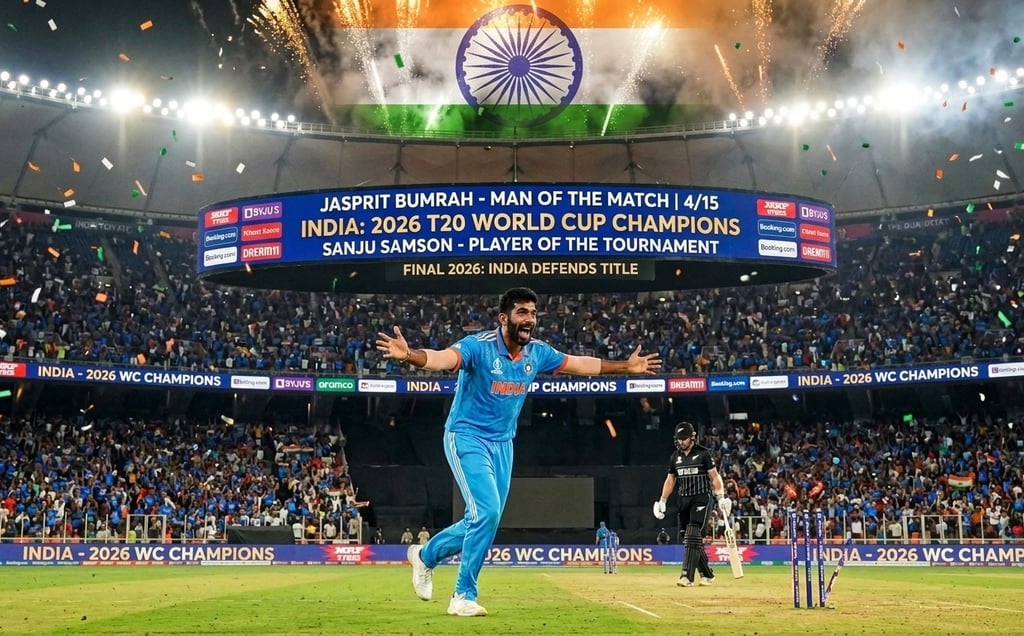
The Ahmedabad Coronation: India’s Historic Back-to-Back T20 World Cup Triumph (2026)
History wasn't just made at the Narendra Modi Stadium on March 8, 2026—it was rewritten in blue ink. In front of a staggering crowd of over 86,000 fans, India achieved what no nation had done before: successfully defending a T20 World Cup title while winning it on home soil.
The 96-run victory over New Zealand was more than a win; it was a tactical masterclass that balanced raw aggression with veteran composure. Here is the definitive analysis of the 2026 T20 World Cup Final.
1. Ground Analysis: The Ahmedabad Factor
The Narendra Modi Stadium, with its vast outfield and high-bounce pitch, was expected to be a test of endurance. However, the 2026 final proved that on a "flat" track, power is king.
* The Pitch: The surface was a batter's paradise—hard, true, and devoid of the "slow-turn" often associated with Indian tracks. This allowed the Indian openers to trust the bounce from ball one.
* The Toss Strategy: New Zealand captain Mitchell Santner won the toss and chose to bowl first, hoping to exploit any early moisture and avoid the evening dew. Statistically, chasing is preferred in Ahmedabad, but the sheer volume of runs India posted rendered the "dew factor" irrelevant.
* The Atmosphere: The psychological pressure of 86,000 chanting fans created an environment that clearly rattled the New Zealand bowlers, leading to a record number of extras (including eight in the Powerplay alone).
2. The First Innings: A 255-Run Statement
India’s total of 255/5 is now the highest ever recorded in a T20 World Cup final, shattering the previous record of 176 (set by India themselves in 2024).
The Powerplay Blitz
Abhishek Sharma (52 off 21) and Sanju Samson (89 off 46) dismantled the New Zealand pace attack with surgical precision.
* Abhishek’s 18-ball fifty was the fastest of the tournament.
* India raced to 92/0 in the first six overs, a Powerplay score that essentially pushed the Black Caps out of the contest before the seventh over began.
The Anchor and the Accelerator
Sanju Samson, who was eventually named Player of the Tournament, played the knock of his life. After the early loss of Abhishek, he partnered with Ishan Kishan (54 off 25) to put on a 105-run stand. Samson’s ability to hit sixes against the spin of Rachin Ravindra—hitting him for three consecutive maximums—was the tactical highlight of the middle overs.
The Neesham Blip and Dube’s Finish
New Zealand briefly fought back in the 16th over when Jimmy Neesham took three wickets in four balls, including the dismissal of skipper Suryakumar Yadav for a golden duck. However, Shivam Dube ensured there was no collapse, plundering 24 runs off the final over to take India past the 250-mark.
3. The Chase: New Zealand’s Uphill Battle
Chasing 256 requires a perfect start, but India’s "Local Legend" had other plans.
Bumrah’s Masterclass
Jasprit Bumrah, bowling at his home ground, was untouchable. He was named Player of the Match for his clinical figures of 4/15.
* Tactical Shift: Recognizing the flat nature of the pitch, Bumrah abandoned high pace and bowled 21 out of 24 balls as "pace-off" deliveries.
* The Early Blows: He removed Rachin Ravindra with his very first ball and dismantled the lower order with his trademark slower-ball yorkers.
Axar Patel’s Support Act
While Bumrah was the spearhead, Axar Patel was the architect of the middle-over squeeze. He removed Finn Allen and the dangerous Glenn Phillips early, finishing with 3/27. New Zealand’s chase effectively ended when they slumped to 53/3 in the Powerplay.
Resistance from Seifert
Tim Seifert (52 off 26) provided the only real resistance for the Kiwis, but once he fell to a slower ball from Bumrah, the tail folded quickly. New Zealand was bundled out for 159 in 19 overs.
4. Tactical Takeaways: Why India is 3-Time Champions
* Redefining the Top Order: The decision to pair the youth of Abhishek Sharma with the rejuvenated Sanju Samson gave India a "strike-rate-first" identity that caught every opponent off guard.
* Clutch Bowling: In the two most critical games (the SF against England and the Final against NZ), India defended totals of 250+. This proves that despite the "batting-friendly" era, India’s bowling depth (Bumrah, Arshdeep, Axar) remains their true superpower.
* The "Home" Mental Shield: Unlike the 2023 ODI final heartbreak, this Indian squad appeared mentally invincible. They utilized the crowd noise as a weapon rather than feeling the pressure of it.
5. Statistical Highlights of the Final
| Category | Stat |
|---|---|
| Highest Total in a Final | 255/5 (India) |
| Winning Margin | 96 Runs |
| Most Sixes in an Innings | 19 (India) |
| Best Bowling Figures | Jasprit Bumrah (4/15) |
| Player of the Tournament | Sanju Samson (342 Runs) |
Conclusion: The Legacy of Suryakumar’s India
The 2026 victory cements India’s status as the greatest T20 nation in history. With three titles (2007, 2024, 2026), they have surpassed England and the West Indies. The era of Suryakumar Yadav’s captaincy and Gautam Gambhir’s coaching has ushered in a "ruthless" brand of cricket that emphasizes intent over individual milestones.
As the trophy is lifted under the Ahmedabad fireworks, one thing is certain: The "Men in Blue" have built a dynasty that will be the blueprint for T20 cricket for the next decade.

Contact
Questions or feedback? Reach out anytime.
© 2026. All rights reserved.